
Last updated October 30, 2026
 Sweep & inspection
 Caps & crowns
 Flue relining
 Masonry repair
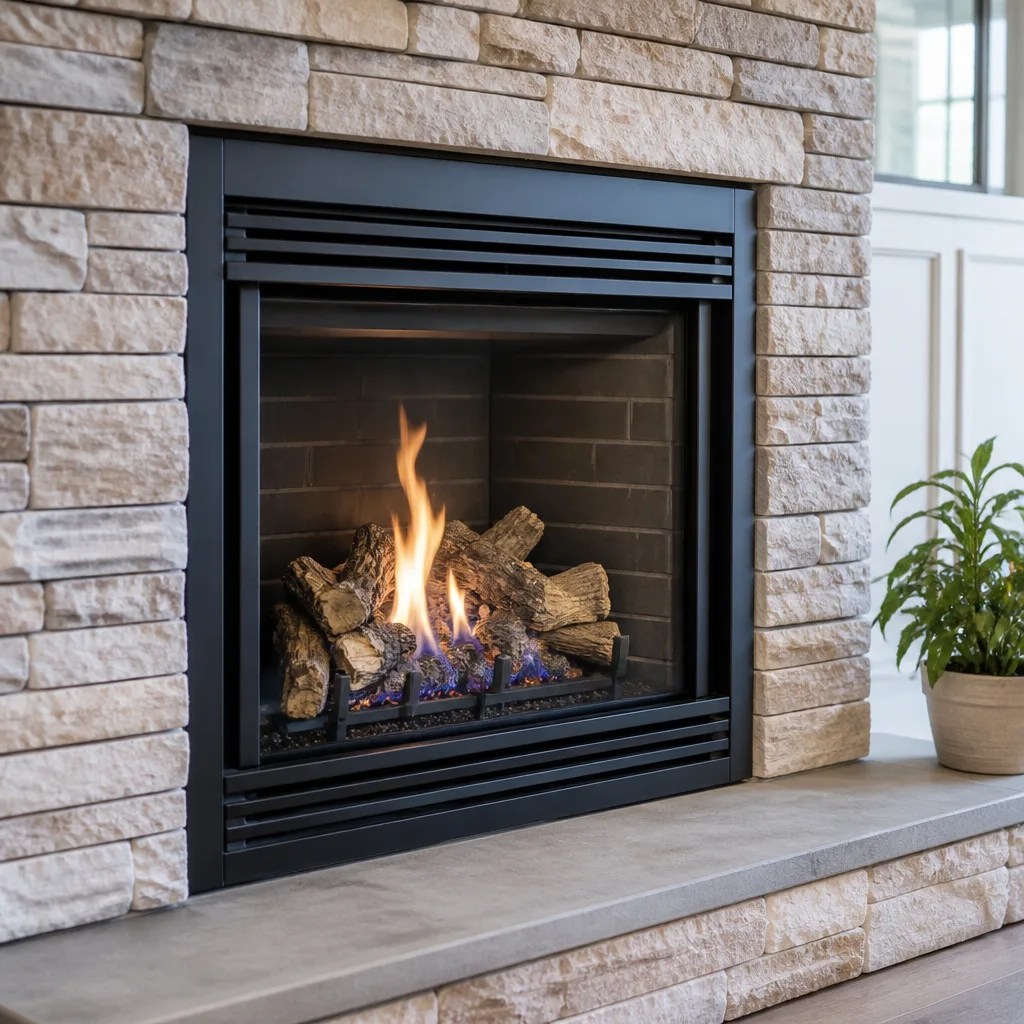 Gas fireplace service
Level 1 sweep and inspection to the NFPA 211 annual standard - flue, crown, cap, and flashing checked and photographed
Chimney sweep logs do not sweep chimneys. They loosen some creosote - which then falls where a brush and vacuum still have to collect it.
Chimney Cleaning Permits, Codes & Inspections in CA: What You Need to Know
A chimney sweep who discovers a cracked flue liner and patches it without a permit isn’t saving you money – they’re creating an unpermitted repair that can delay or derail a home sale in Orange County, where buyer inspections routinely flag chimney work. Most Irvine homeowners assume chimney cleaning never requires a permit. That assumption is mostly right, until it isn’t. The line between a routine sweep and regulated repair work is thinner than most people realize, and California building codes plus City of Irvine municipal requirements draw that line in ways that surprise even experienced homeowners. This guide explains exactly where sweeping ends and permitting begins, what inspectors actually look for, and how to protect yourself from expensive liability at resale.
Quick Answer
A standard chimney cleaning (sweeping) does not require a permit anywhere in California, including Irvine. However, any repair that touches the flue liner, firebox, chimney structure, or damper assembly typically triggers City of Irvine permit requirements under California Residential Code Section R1003. If cleaning reveals damage requiring repair, the work must be permitted, inspected, and documented – or you risk unpermitted-work liability when you sell your home.
Styles & brands we work with
Table of Contents
- When Cleaning Crosses Into Repair: The Permit Threshold
- California Residential Code R1003: What It Actually Says
- NFPA 211 Inspections: Levels, Triggers, and Documentation
- South Coast AQMD Rule 445 and Chimney Condition Certification
- How to Pull Permit History on a Chimney in Irvine
- What an Irvine Chimney Inspector Actually Checks
- Permit Costs and Timelines for Chimney Work in Irvine
- The Resale Problem: Unpermitted Chimney Work and Home Sales
When Cleaning Crosses Into Repair: The Permit Threshold
Here’s the threshold in plain terms. Sweeping removes soot, creosote, and debris from the flue interior. That’s maintenance, not construction, and no California municipality requires a permit for it. The moment the sweep finds damage that requires more than brushing – a cracked flue liner, deteriorated mortar joints, a rusted damper, a firebox with missing bricks – the work shifts from maintenance to repair. Learn more in our Chimney Cleaning Warning Signs: A Irvine Homeowner’s Reference Guide. In Irvine, repair work on chimneys falls under the building permit requirements administered by the City of Irvine Building and Safety Division.
The specific conditions that trigger permit requirements in Irvine include:
- Flue liner replacement or repair. Any work that involves installing a new liner, whether stainless steel or a poured-in-place material, requires a permit. A reline is structural, not cosmetic.
- Firebox rebuild or repair. If the masonry firebox (the area where the fire actually burns) needs new firebrick, refractory mortar, or structural work, that’s permitted scope.
- Damper replacement or installation. Replacing a throat damper or installing a top-sealing damper changes the chimney’s air-control system and requires permit review in Irvine.
- Chimney crown repair or replacement. A cracked crown that allows water intrusion is a structural defect. Crown rebuilds fall under R1003’s repair provisions.
- Masonry repointing or rebuilding above the roofline. If the chimney stack itself has spalling brick or failed mortar joints that require more than surface patching, a permit is typically required.
- Flue resurfacing using HeatShield or similar systems. HeatShield liner restoration is a repair method that rehabilitates damaged flues without full tear-out. Even though it’s less invasive than a full reline, Irvine treats it as a repair that requires a permit when it addresses code-level deficiencies.
A sweep-only company that finds these conditions and says “we can patch that” without mentioning permits is doing unpermitted work. In our experience serving Irvine, we’ve seen homeowners learn this only at escrow, when the buyer’s chimney inspection flags a repair that never had a permit on file, and the seller is suddenly negotiating a price reduction or a retroactive permit process that’s far more expensive than doing it properly the first time.
California Residential Code R1003: What It Actually Says
California Residential Code (CRC) Section R1003 governs masonry and factory-built chimneys and fireplaces in residential construction. It’s part of Title 24 of the California Code of Regulations, and Irvine enforces it through the city’s building department. The section covers everything from footing requirements to flue sizing, clearance to combustibles, and termination height above the roof.
For homeowners, the most relevant provisions of R1003 in plain terms are:
- Flue sizing requirements. The flue must be sized to match the appliance or fireplace opening. A flue that’s too large or too small is a code violation that an inspector will flag.
- Clearance to combustibles. The chimney must maintain specific distances from wood framing, insulation, and other combustible materials. In older Irvine homes, especially those built before the 1980s, clearances are frequently inadequate by modern standards.
- Termination height. The chimney must extend at least 3 feet above the roof penetration and at least 2 feet above any structure within 10 feet. This is a common noncompliance issue on single-story Irvine ranch homes with additions.
- Liner requirements. R1003 requires that all masonry chimneys serving open fireplaces be lined with a code-compliant material. An unlined or damaged liner is a code violation that must be repaired before the chimney can be used.
- Firebox construction. Fireboxes must be constructed with firebrick or approved refractory material. Cosmetic repairs to the firebox face don’t require permits, but structural firebox work does.
What R1003 doesn’t do is regulate cleaning. The code is silent on sweeping because sweeping doesn’t alter the chimney’s construction. That’s why the permit threshold sits at the moment cleaning reveals something that requires a repair action under R1003. A sweep that ends with “your chimney is clean but the liner has a 6-inch crack” has just triggered a code conversation, whether the homeowner realizes it or not.
Homeowners who want to read the actual code text can find CRC Section R1003 through the California Building Standards Commission or access it through the City of Irvine’s building code library. For practical purposes, what matters is knowing that any repair work altering the chimney’s structure, liner, or fire-safety components is regulated, and Irvine’s inspectors take R1003 compliance seriously.
NFPA 211 Inspections: Levels, Triggers, and Documentation
NFPA 211 is the National Fire Protection Association standard that governs chimneys, fireplaces, vents, and solid fuel-burning appliances. California has adopted it through reference in the state’s mechanical and building codes, and it’s the framework Irvine chimney inspectors and real estate professionals use when evaluating chimney condition. The standard defines three levels of inspection, and understanding the difference matters when you’re buying, selling, or recovering from a chimney fire.
Level 1 inspection is the routine check performed during an annual sweep. The sweep inspects the readily accessible portions of the chimney interior and exterior, verifies the flue is free of obstruction and combustible deposits, and confirms basic soundness. No permit is involved. No special equipment is needed. This is what you get when you book a standard chimney cleaning in Irvine.
Level 2 inspection is more thorough and uses video scanning equipment to examine the full interior of the flue, including areas that can’t be seen with the naked eye. A Level 2 inspection is specifically required by NFPA 211 in three situations:
- Upon sale or transfer of a property (real estate transaction inspections)
- After a chimney fire, earthquake, or weather event that may have damaged the chimney
- After any change to the system, such as a new appliance or liner replacement
A Level 2 inspection produces a documented video record and a written report. In Irvine, where buyer-side chimney inspections have become standard practice in real estate transactions, a Level 2 inspection is often the document that either clears a sale or becomes the basis for a repair credit negotiation. If the Level 2 finds liner damage, the report becomes evidence that repair work is needed – and if that repair work wasn’t permitted, it becomes a liability.
Level 3 inspection is the most invasive and is required when a Level 1 or 2 inspection finds conditions that require access to concealed areas of the chimney or flue. It may involve removing portions of the chimney structure or building finish. Level 3 inspections are rare, usually triggered by structural failure, fire damage, or collapsed flue sections.
What NFPA 211 gives Irvine homeowners is a standardized language. When a buyer’s inspector says “the chimney failed Level 2,” that means something specific – and it usually means repair negotiations are about to start. Homeowners who’ve had regular Level 1 sweeps with documented video records from a qualified chimney contractor are in a far better position than those who’ve had “visits” from a cleaner who never documented anything. Our Chimney Sweep Maintenance Checklist for Irvine Homeowners can help you stay on track.
We recommend that any Irvine homeowner planning to sell within five years keep a Level 2 inspection on file, dated within the last two years. It’s the single most useful document a homeowner can produce when a buyer’s inspector starts asking chimney questions. For a deeper look at how our team handles inspections in the area, see Chimney Sweep in Villa Park for a description of our documentation standards.
South Coast AQMD Rule 445 and Chimney Condition Certification
South Coast Air Quality Management District (South Coast AQMD) Rule 445 governs wood-burning devices in the South Coast Air Basin, which includes all of Orange County and therefore Irvine. The rule regulates what devices can be installed, when burning is prohibited (No-Burn Days), and what disclosures are required when selling a home with a wood-burning fireplace or stove.
Here’s how Rule 445 intersects with chimney condition, and why Irvine homeowners should pay attention:
- Wood-burning disclosure on resale. Rule 445 requires that sellers disclose the presence of a wood-burning fireplace or stove at the time of sale. Buyers must be informed that the property includes a wood-burning device subject to AQMD rules. This disclosure requirement makes chimney condition a visible issue in Orange County transactions.
- No-Burn Day restrictions. South Coast AQMD declares No-Burn Days during periods of high particulate pollution. Burning wood on a No-Burn Day violates Rule 445 and carries penalties. A chimney’s condition doesn’t affect the No-Burn Day determination, but burning in a damaged chimney on an allowed day still creates a fire hazard.
- Compliance with maximum particulate emissions. New wood-burning devices installed in Irvine must meet specific particulate emission standards. Retrofit work on existing fireplaces generally doesn’t require a new device, but if a repair involves installing a new insert, it must comply with Rule 445’s current standards.
- Permit history and Rule 445 compliance. If a homeowner at some point installed a wood stove or insert without proper AQMD notification, that installation may be flagged during a real estate transaction. The buyer’s diligence process can surface AQMD compliance questions that run parallel to chimney permit questions.
South Coast AQMD Rule 445 doesn’t require a permit for cleaning and doesn’t require chimney condition certification for an existing, unmodified fireplace. But it does create a regulatory context where a chimney’s condition and history become visible during a sale. A homeowner with a documented, code-compliant chimney – including permitted repairs – will move through the AQMD disclosure process cleanly. A homeowner with unpermitted liner work or a never-permitted stove insert will likely face follow-up questions.
For Irvine homeowners, the practical takeaway is this: Rule 445 makes your chimney’s legal status part of the public record of your property. The cleaner that record, the smoother the transaction.
How to Pull Permit History on a Chimney in Irvine
Requesting permit history for a chimney from the City of Irvine is straightforward, and it’s something any homeowner should do before buying a house with a fireplace, before selling one, or before inheriting a home where previous owners may have done chimney work. Here’s the process:
- Visit the City of Irvine Building and Safety Division. The department is located at City Hall and maintains records for all building permits issued within city limits. You can request records in person or through the city’s online permit portal.
- Identify the property by address. You’ll need the full street address. The city’s records are organized by parcel number (APN), which you can find on your property tax bill or through the Orange County Assessor’s office.
- Request the permit history report. Ask specifically for “all building permits related to the fireplace, chimney, or wood-burning appliance.” The city can pull a parcel-level report showing every permit issued for the address, including mechanical, plumbing, and building permits.
- Review the report for chimney-specific entries. Look for permits that reference “fireplace,” “chimney,” “flue,” “hearth,” or “vent.” If the previous owner replaced a liner, rebuilt a firebox, or installed a wood stove, that work should appear as a permit entry.
- Check for final inspection sign-off. A permit that was issued but never closed (meaning no final inspection was completed) is effectively incomplete work. Confirm that any chimney permits show a “finaled” status.
- If no chimney permits appear, and the home has had obvious chimney repairs. That’s the red flag. Work that should have been permitted wasn’t. You may need a Level 2 inspection to assess the current condition and determine what, if anything, needs to be retroactively addressed.
Missing permit history signals more than just a paperwork problem. It suggests the prior work was performed by someone who either didn’t know the code or chose to ignore it – and someone who ignores code requirements on the front end often cuts corners on the work itself. We’ve inspected Irvine chimneys where “repairs” done without permits involved liner materials that weren’t code-listed, firebox patches using the wrong mortar, and dampers installed with mismatched components. The permit was missing because the work wouldn’t have passed inspection.
Homeowners who find missing permits aren’t automatically facing a crisis. The City of Irvine has a process for retroactive permitting, which involves documenting the condition of the chimney through a Level 2 inspection, submitting plans if needed, and paying applicable fees. It’s more expensive than getting the permit upfront, but it resolves the liability. For guidance on what a repair-capable sweep company looks for during these inspections, see Limestone Chimney Sweep home for an overview of our full-service approach.
What an Irvine Chimney Inspector Actually Checks
When a chimney repair permit is issued in Irvine, the city assigns a building inspector to review the work at designated stages. The inspection focuses on code compliance and fire safety. Here’s what the inspector checks:
- Flue sizing and material. The installed liner must match the appliance or fireplace requirements under CRC R1003. The inspector verifies the material is listed for the application, whether stainless steel (such as DuraFlex), poured-in-place material, or HeatShield resurfacing.
- Clearance to combustibles. The inspector checks that the chimney maintains required distances from wood framing, insulation, and other combustible materials, especially where the chimney passes through floors or the roof.
- Firebox construction. Repaired fireboxes must use firebrick or approved refractory, with the correct mortar, and meet depth and dimension requirements.
- Damper operation and installation. A replaced damper must operate correctly and be installed to code. Famco and Copperfield dampers are common in Irvine because they meet listing requirements and are readily acceptable to inspectors.
- Crown and termination. The chimney crown must have proper overhang and slope, and the termination must meet height requirements above the roof. The inspector checks for proper cap installation – Olympia Chimney caps are a common sight on Irvine roofs.
- Structural soundness. Masonry chimneys must show no significant cracking, spalling, or lean. On older Irvine homes, inspectors frequently flag deteriorated mortar joints that need repointing.
The inspection process is designed to catch fire-safety issues, not to make the work difficult. In practice, permitted repairs performed by a chimney contractor who knows R1003 and Irvine’s local amendments sail through inspection. For help identifying issues early, see our Chimney Sweep Troubleshooting: Common Problems and How to Fix Them. Unpermitted repairs are the ones that fail – usually because the work was done by someone who didn’t know what the inspector would be looking for, and cut the exact corners the inspection exists to catch.
Here’s a step-by-step look at what a permitted chimney repair project looks like in Irvine from start to finish:
- Diagnosis. The sweep or inspection identifies a code-level problem: cracked liner, failed damper, deteriorated firebox, damaged crown.
- Permit application. The contractor or homeowner applies to the City of Irvine with a scope of work, product specifications, and any required drawings.
- Permit issuance. The city reviews and issues the permit, with applicable fees based on the work’s valuation.
- Repair work. The contractor performs the work using code-listed materials – for a reline, that might be a DuraFlex stainless liner; for firebox rebuilding, refractory mortar; for damper replacement, a Famco or Copperfield unit.
- Rough inspection. For structural work, the inspector checks the work before it’s closed up (e.g., verifying clearances and liner installation before any concealment).
- Final inspection. The Inspector verifies the completed work meets R1003 and local amendments, then signs off, closing the permit.
- Document retention. The homeowner keeps the finaled permit documentation with other property records, and produces it at resale.
That documentation is what makes the difference between a chimney that sails through escrow and one that becomes a negotiation point.
Permit Costs and Timelines for Chimney Work in Irvine
Permit costs in Irvine vary based on the valuation of the work. For most chimney repairs – liner replacement, firebox rebuilding, damper installation – the permit fee falls in the range of $150 to $600 depending on the project’s scope. The city calculates fees based on the work’s declared valuation, and there may be additional fees for plan check review if drawings are required. These are rough figures; current Irvine fee schedules are available through the Building and Safety Division, and final costs depend on the specific project.
Timelines are generally reasonable. Simple repair permits in Irvine are often issued over-the-counter or within a few days. Projects requiring plan review take longer, typically one to three weeks. Inspections are scheduled within a few days of request, and final sign-off typically happens the same week if the work passes.
The cost comparison is worth noting:
- Permitted reline of a typical Irvine masonry chimney: Permit fee $200-$500, inspection included, permits finaled within 2-4 weeks total. Liability resolved.
- Unpermitted reline of the same chimney: No permit fee upfront, but at resale, the buyer’s Level 2 inspection flags unpermitted work. Negotiation typically costs the seller $2,000-$8,000 in credits or retroactive permitting, and the timeline stretches into weeks during escrow when every day matters.
The “savings” from skipping a permit are an illusion. Any Irvine real estate agent who’s shepherded a transaction through a chimney-related repair negotiation will say the same: pay for the permit upfront, or pay more for the omission later.
The Resale Problem: Unpermitted Chimney Work and Home Sales
Unpermitted chimney work creates liability at resale in three specific ways, and Irvine’s real estate market makes all three more likely to surface than in areas where buyer inspections are less rigorous.
First, the buyer’s inspection process is thorough. In Orange County, it’s standard for buyers to hire a certified chimney inspector or a general inspector who knows what to look for on Level 2 chimney sweeps. The inspector’s job is to flag code issues. Unpermitted liner work, firebox patches, or damper replacements are exactly the things they’re trained to spot. The question isn’t whether they’ll find it – it’s what they do when they find it.
Second, the seller’s disclosure requirements are specific. California’s Transfer Disclosure Statement asks sellers to disclose known material defects and work performed without permits. A seller who knows about unpermitted chimney work but doesn’t disclose it has created a post-sale liability that can result in legal claims. A seller who does disclose it has just created a negotiating point that a buyer will use to demand a price reduction.
Third, the retroactive permitting path is expensive. When unpermitted work surfaces late in escrow, the seller has two bad choices: provide a credit so the buyer assumes the risk, or attempt to pull a retroactive permit under time pressure. Retroactive permitting in Irvine involves documenting the work with a Level 2 inspection, paying the permit fee plus applicable penalties, and hoping the work passes inspection. If it doesn’t pass – and unpermitted work frequently doesn’t, which is why it wasn’t permitted in the first place – the seller is on the hook for bringing it up to code, at whatever that costs.
None of this applies to standard cleaning. A chimney cleaning needs no permit, creates no record, and raises no disclosure issue. The liability enters only when cleaning reveals a problem, and the problem gets “fixed” without pulling a permit. That’s the distinction Irvine homeowners need to understand before they invite a chimney company onto the roof.
For homeowners in neighboring communities facing similar decisions, the same framework applies. See Chimney Repair in Villa Park for a look at how we approach repair work with full code compliance, and Dryer Vent Cleaning in Villa Park for the parallel fire-safety concerns in dryer ventilation.
Key Takeaways
- Cleaning never requires a permit in Irvine. Sweeping is maintenance, not construction. No California municipality regulates it.
- Repair does require a permit. Liner work, firebox rebuilding, damper replacement, and structural masonry repairs all trigger City of Irvine permit requirements under CRC R1003.
- A Level 2 NFPA 211 inspection is your best documentation. It’s required for real estate transactions and after chimney fires, and it produces a video record that becomes evidence in any dispute.
- South Coast AQMD Rule 445 makes your chimney’s status visible. Wood-burning disclosures on resale mean chimney condition can’t hide.
- Missing permit history signals work quality problems. If a chimney had obvious repairs but no permits, the work probably wouldn’t have passed inspection.
- Permitted work costs less in the long run. The permit fee is small compared to resale-negotiation losses from unpermitted repairs.
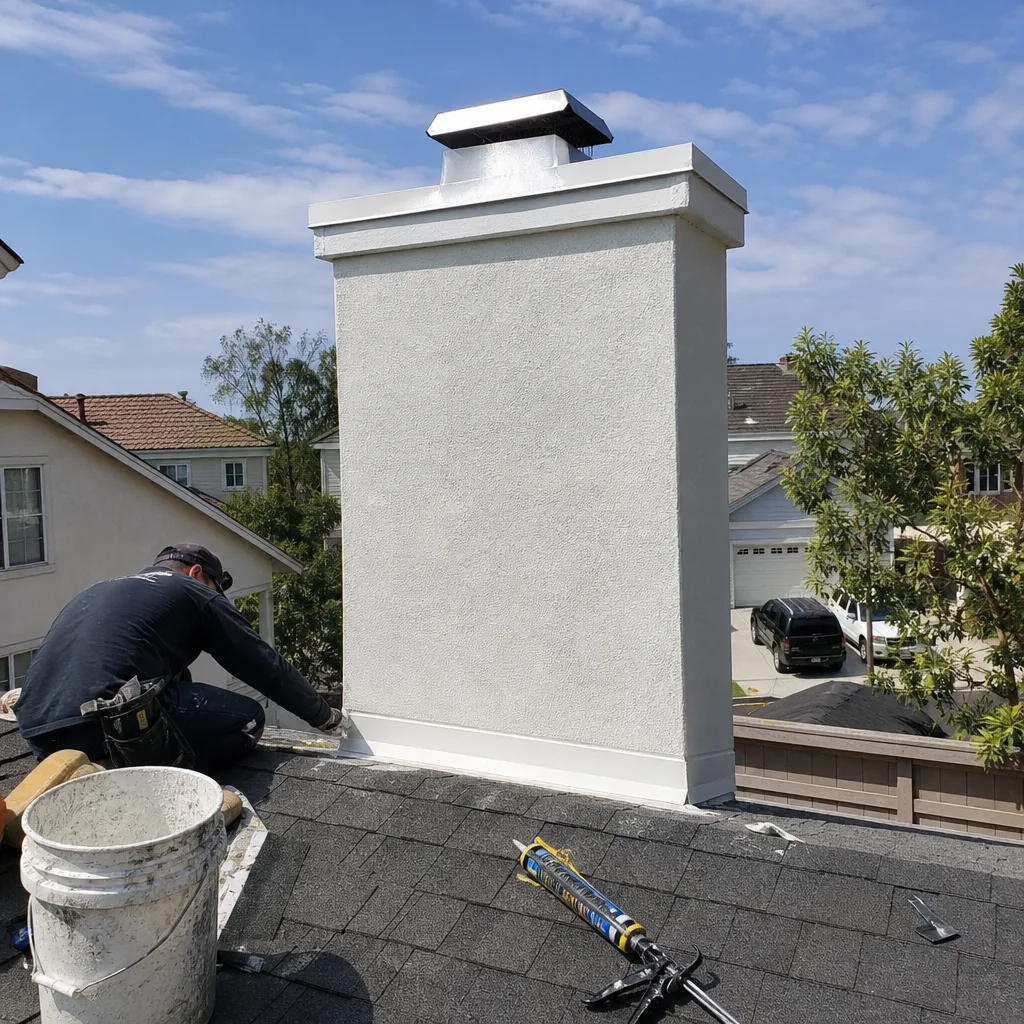
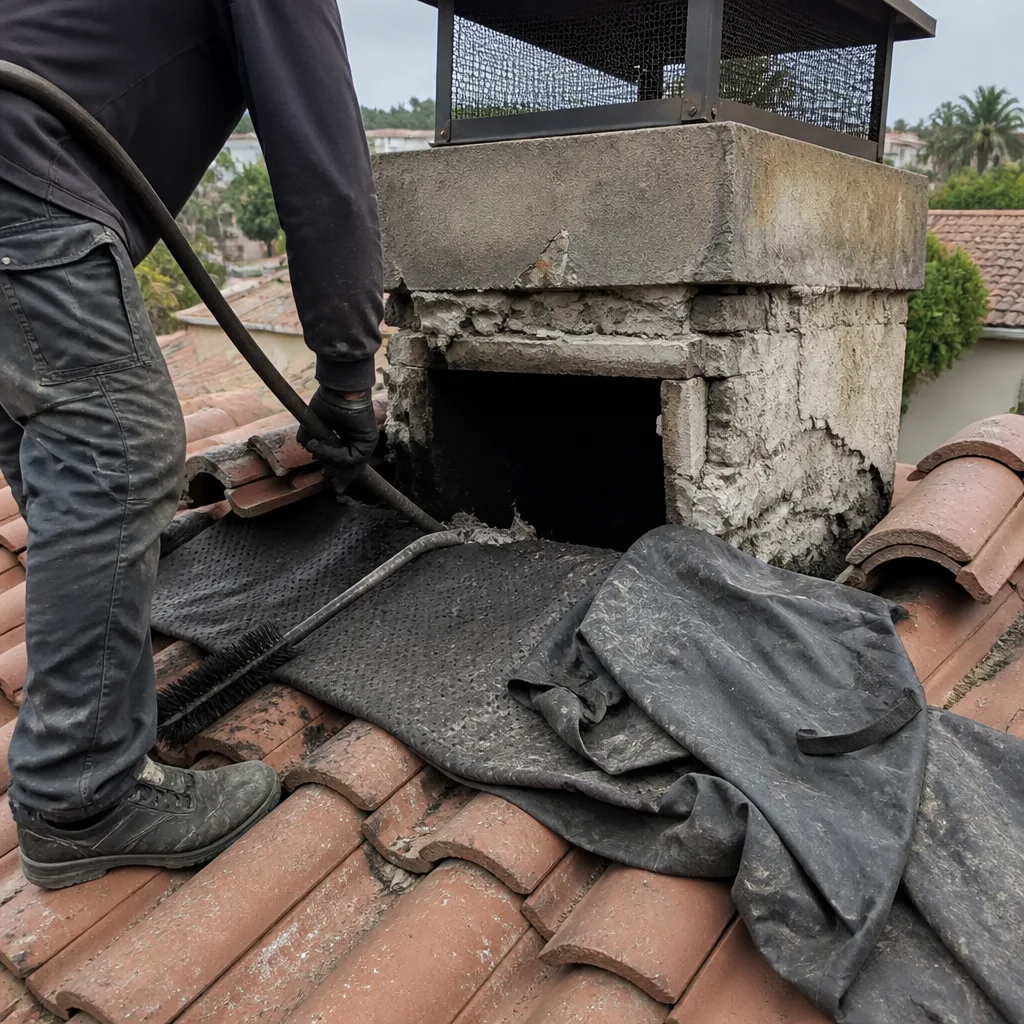
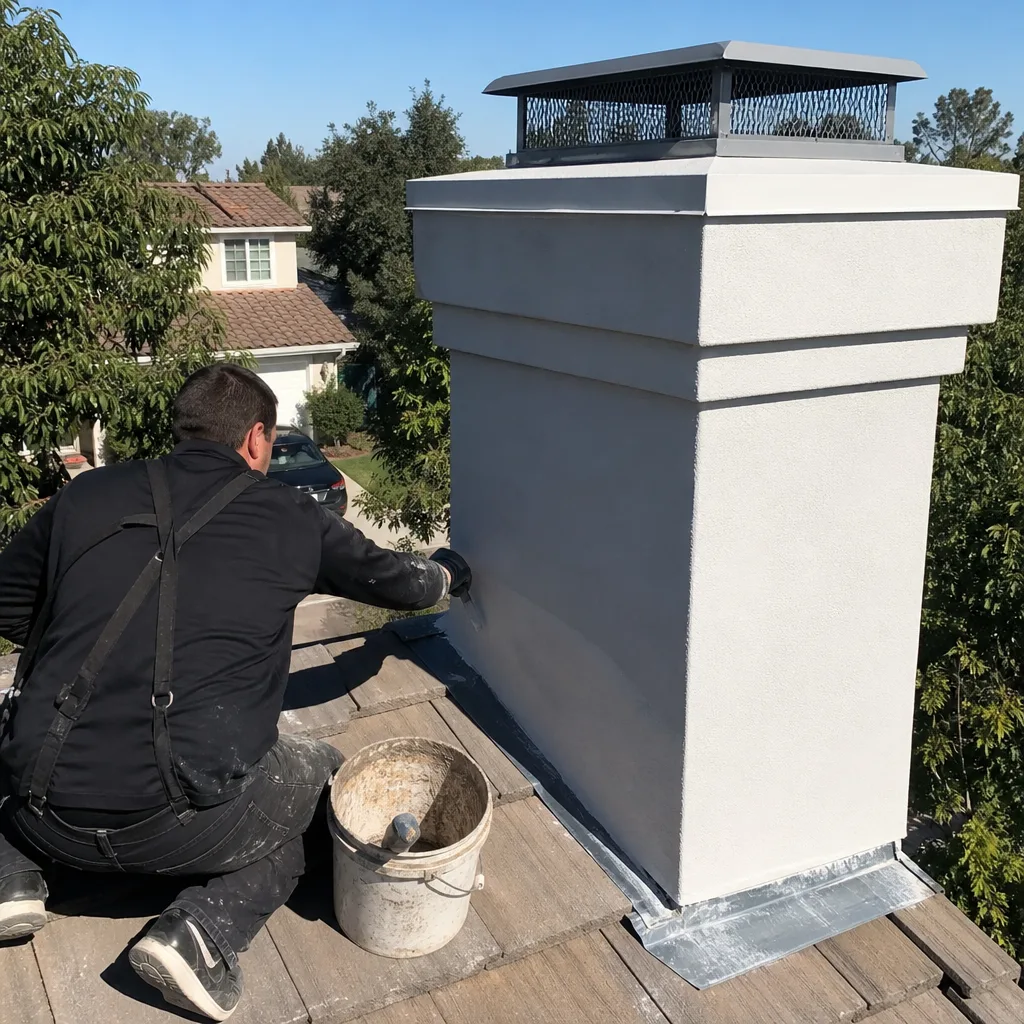
See the difference
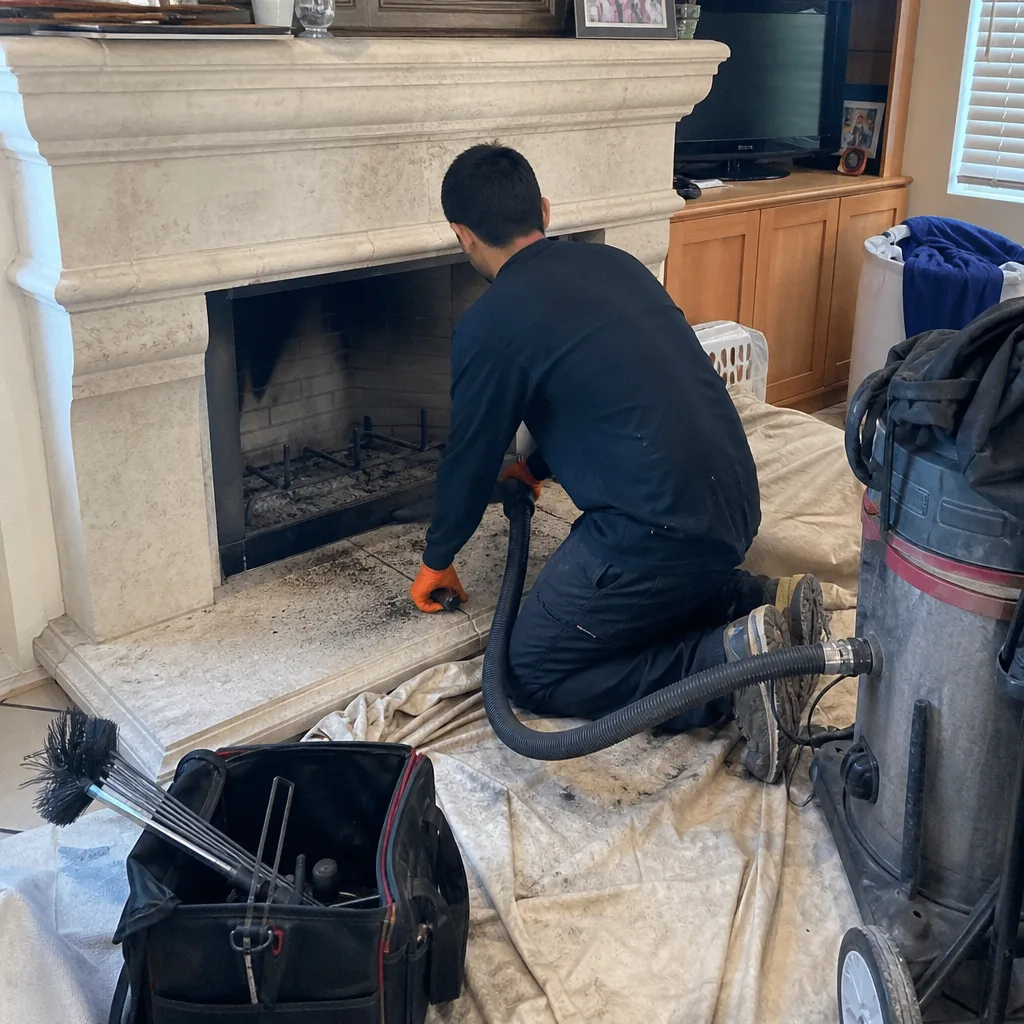 Before
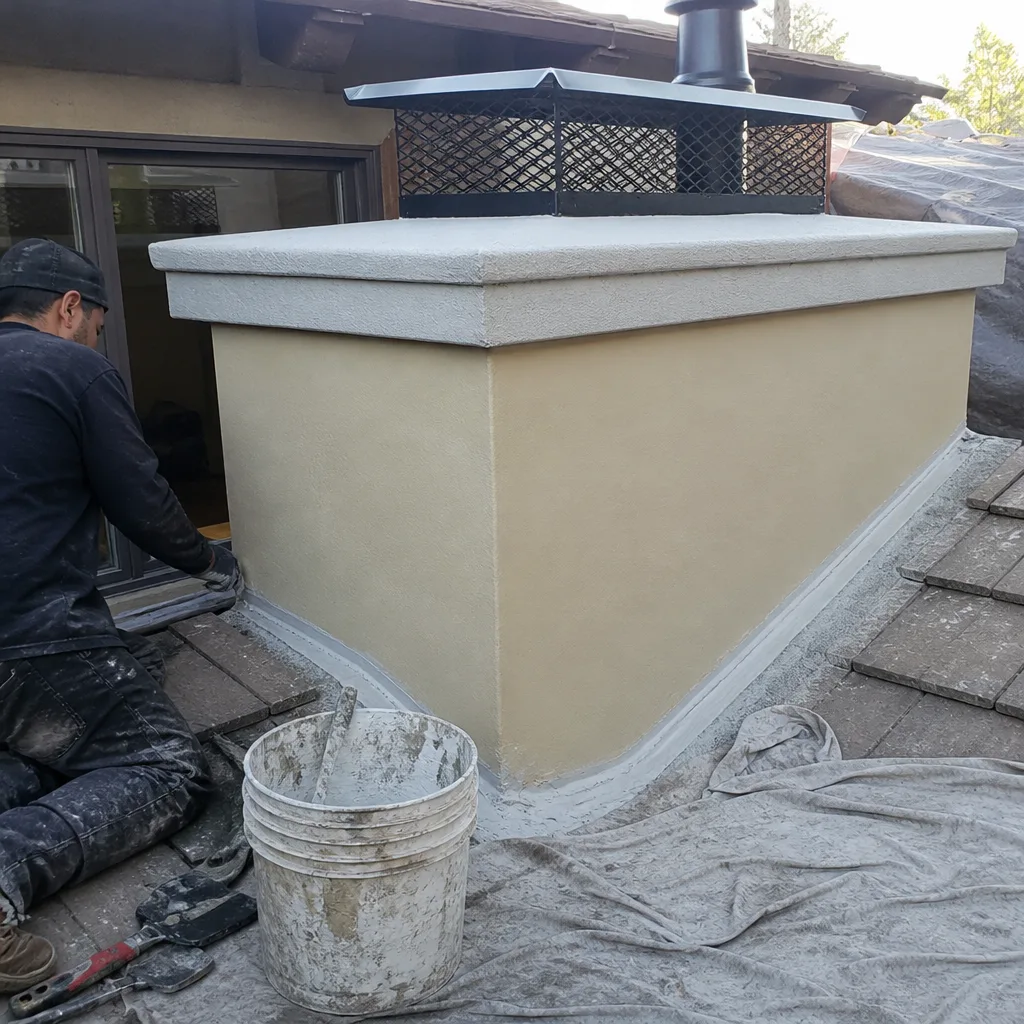 After
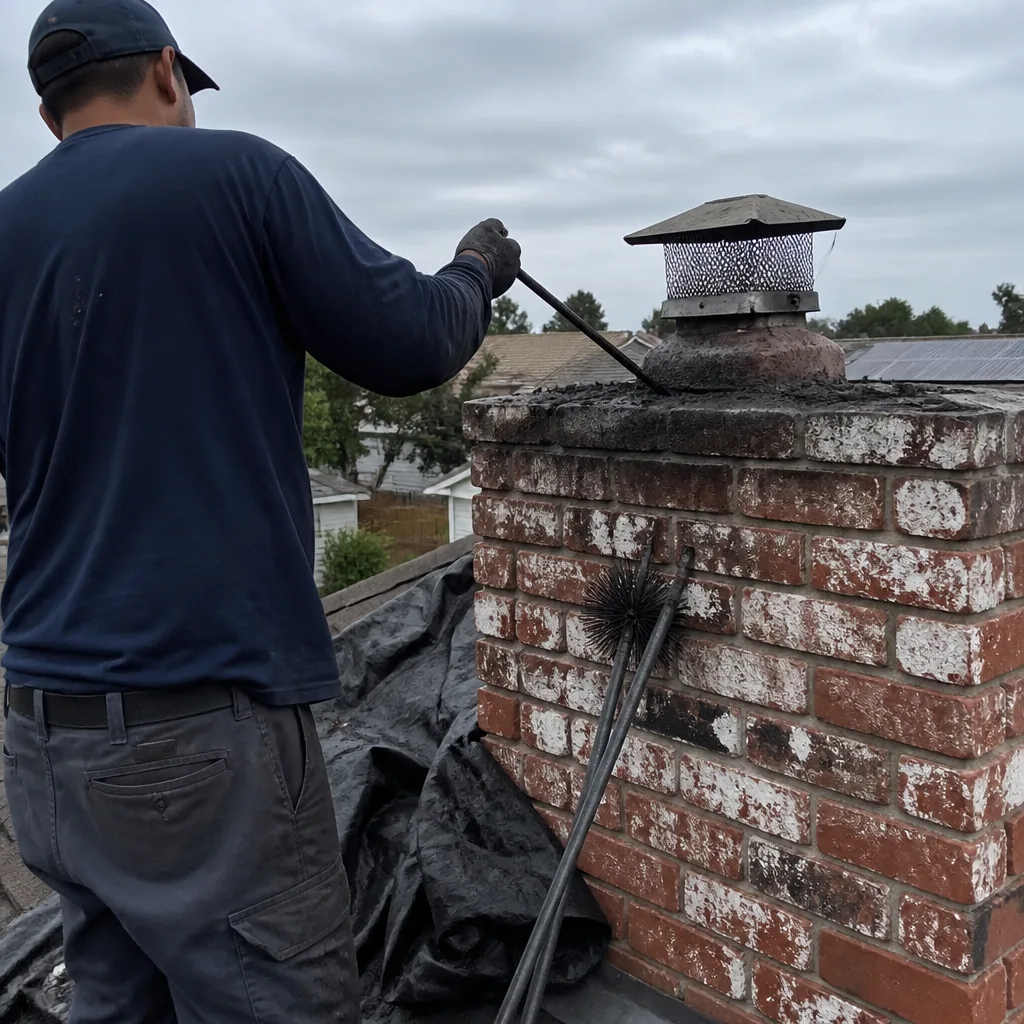 Before
 After
 Before
 After
When to Call a Professional
Call a chimney professional any time a sweep reveals damage that might require repair – the professional can tell you whether the repair crosses the permit threshold. Call after any chimney fire, even a small one, because a Level 2 inspection is code-required and the damage may not be visible from the outside. Call before you buy or sell a home with a fireplace in Irvine, so you have documentation in hand before negotiations start. Call if you’ve inherited a home where previous chimney work shows no permit history, and you’re not sure what’s behind the walls. Limestone Chimney Sweep offers free estimates in Irvine – call (855) 341-5439, and we’ll assess your chimney’s condition and explain exactly what needs permitting and what doesn’t.
Frequently Asked Questions
No. Chimney cleaning (sweeping) is classified as maintenance, not construction, and no permit is required anywhere in California, including Irvine. The permit requirement triggers only when cleaning reveals damage that requires repair work.
Flue liner replacement or repair, firebox rebuilding, damper replacement or installation, chimney crown repair, masonry repointing above the roofline, and HeatShield flue resurfacing all require permits in Irvine when they address code-level deficiencies under CRC Section R1003.
Simple repair permits in Irvine are typically issued over-the-counter or within a few days. Projects requiring plan review take one to three weeks. Final inspection usually happens within the same week the work is completed, assuming the work passes.
You can sell it, but you’ll face a disclosure obligation. California’s Transfer Disclosure Statement requires you to disclose known unpermitted work. The buyer’s chimney inspection will likely find the work anyway, and you’ll negotiate a price reduction or retroactive permitting under escrow-time pressure. Getting the permit resolved before listing is cheaper and faster.
A Level 1 inspection is the routine check during an annual sweep; it covers readily accessible portions of the chimney. A Level 2 inspection uses video scanning to examine the full flue interior and is required for real estate transactions, after chimney fires, and after system changes like new liners or appliances.
Yes, in two ways. Rule 445 requires disclosure of wood-burning devices when selling your home, which makes chimney condition a visible issue in Orange County transactions. It also imposes No-Burn Day restrictions during high-pollution periods. Existing fireplaces don’t need replacement, but any work done on them must not violate the rule’s emission standards.
The Bottom Line
Chimney cleaning in Irvine requires no permit – but the moment cleaning turns into repair, California code and local Irvine requirements take over. The threshold sits at liner damage, firebox problems, damper failure, and structural masonry work. Permitted repairs, documented with Level 2 inspections and compliant with South Coast AQMD Rule 445, protect you at resale. Unpermitted work creates a liability that surfaces at the worst possible moment: during escrow, when the buyer’s inspector finds it and negotiations are measured in thousands of dollars per day. Know where the line sits, pull your permit history, and work with a chimney contractor who understands the code. The permit is cheap insurance; the alternative is expensive evidence.
Written by the team at Limestone Chimney Sweep, serving Irvine since 2014.