
Last updated October 30, 2026
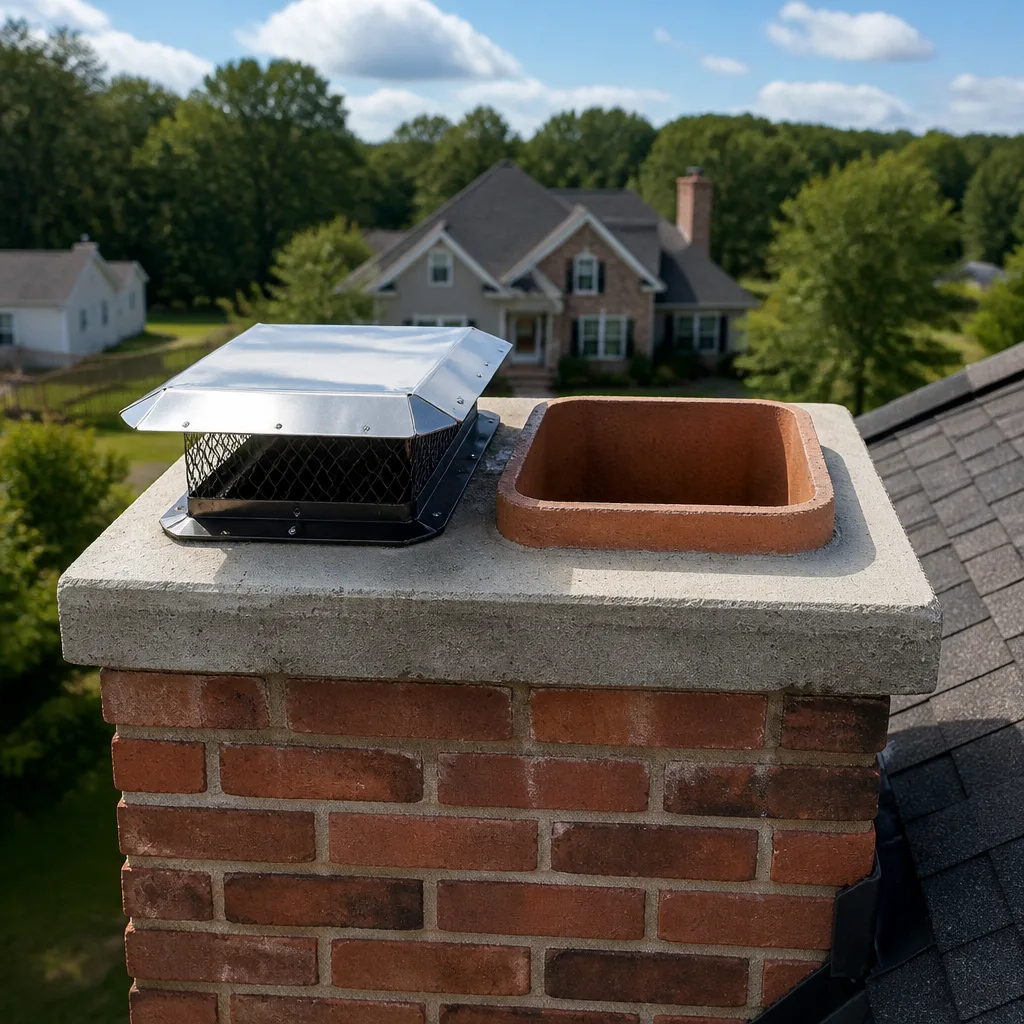 Sweep & inspection
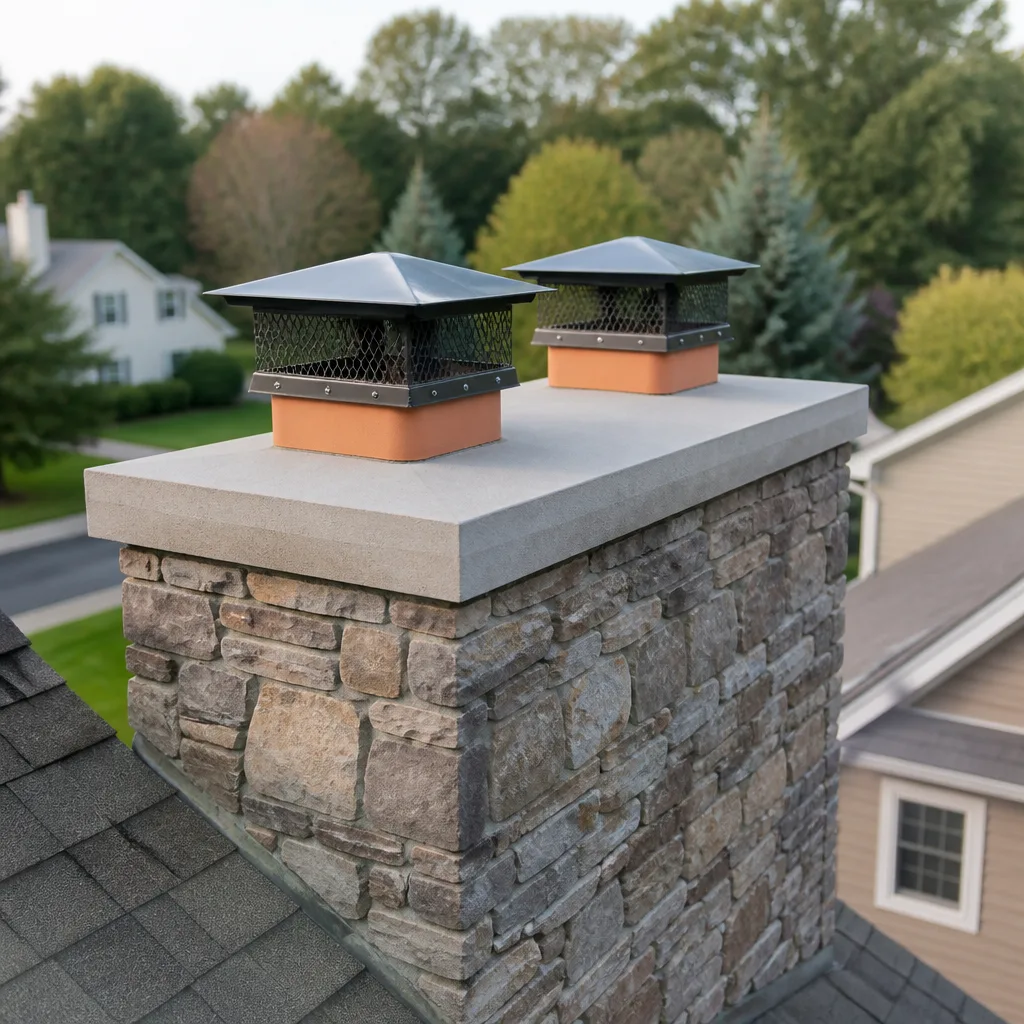 Caps & crowns
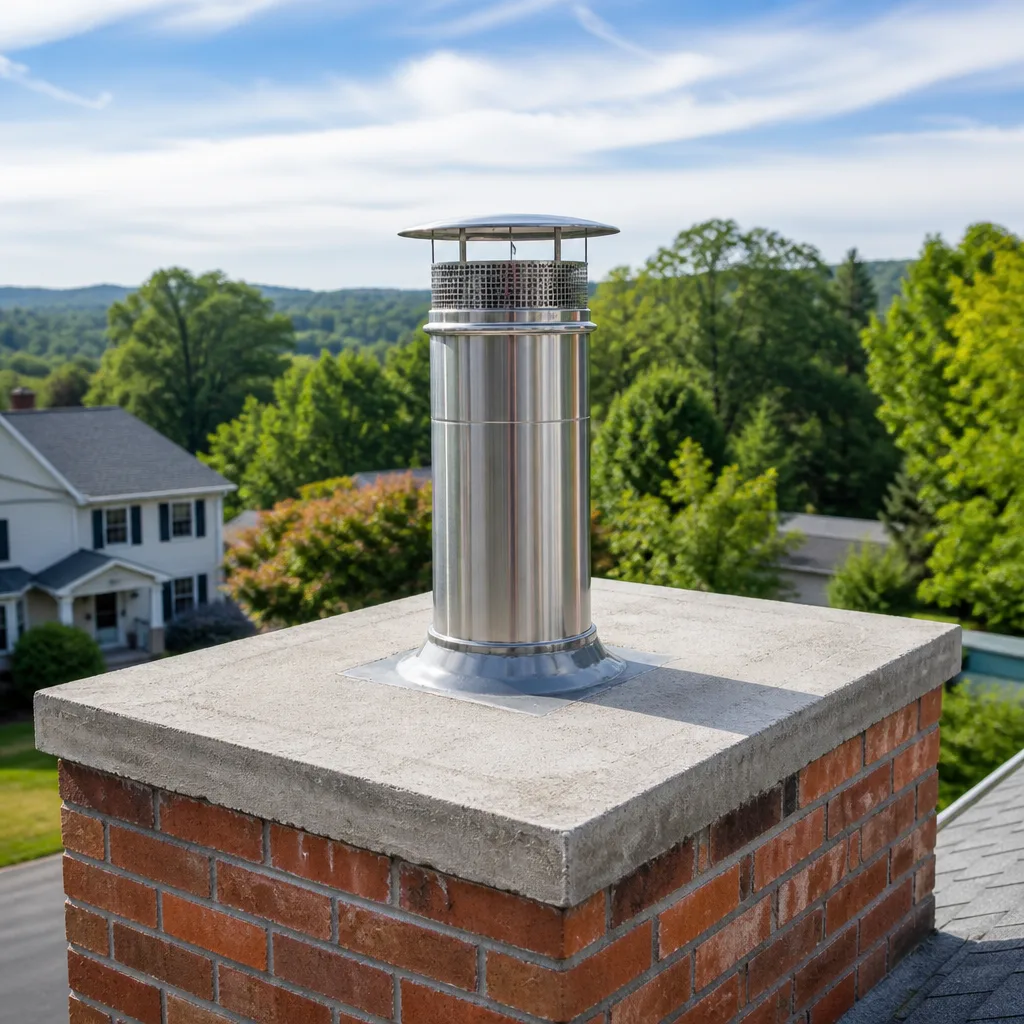 Flue relining
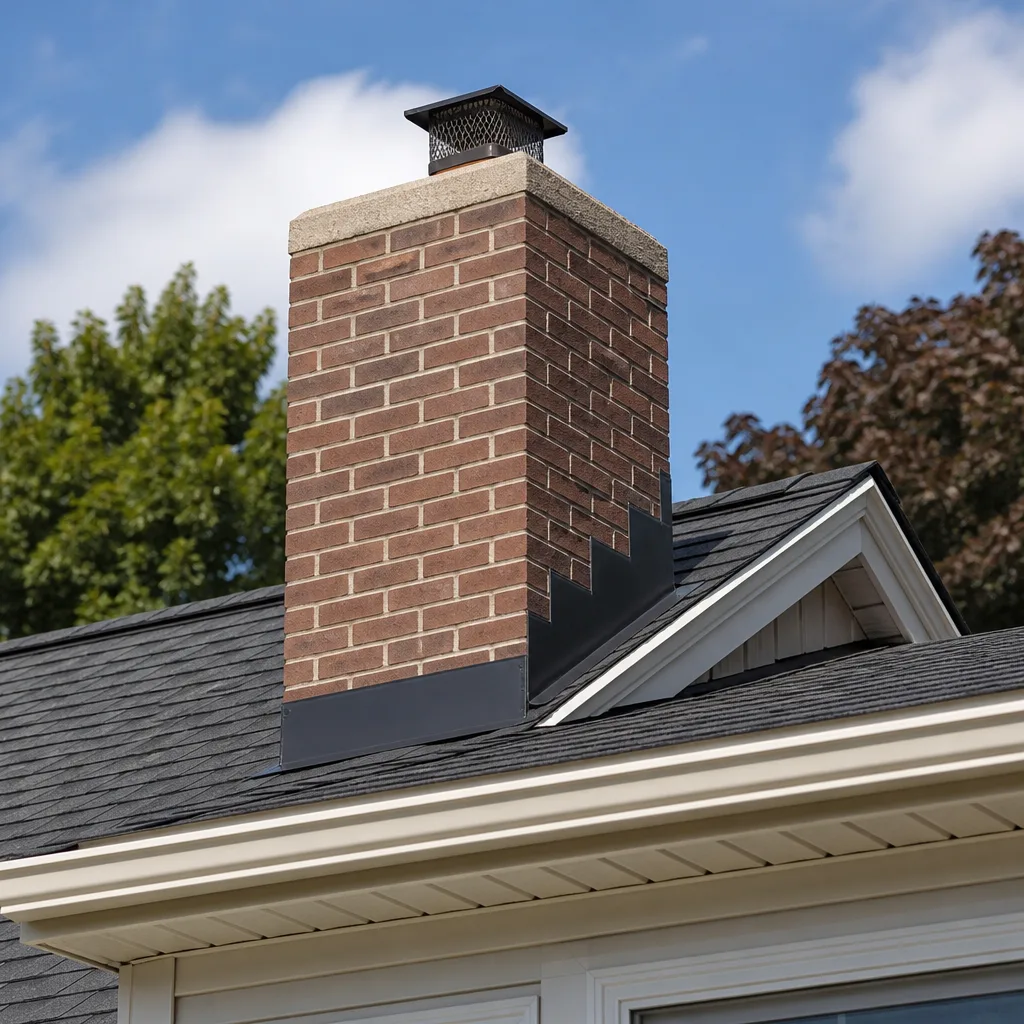 Masonry repair
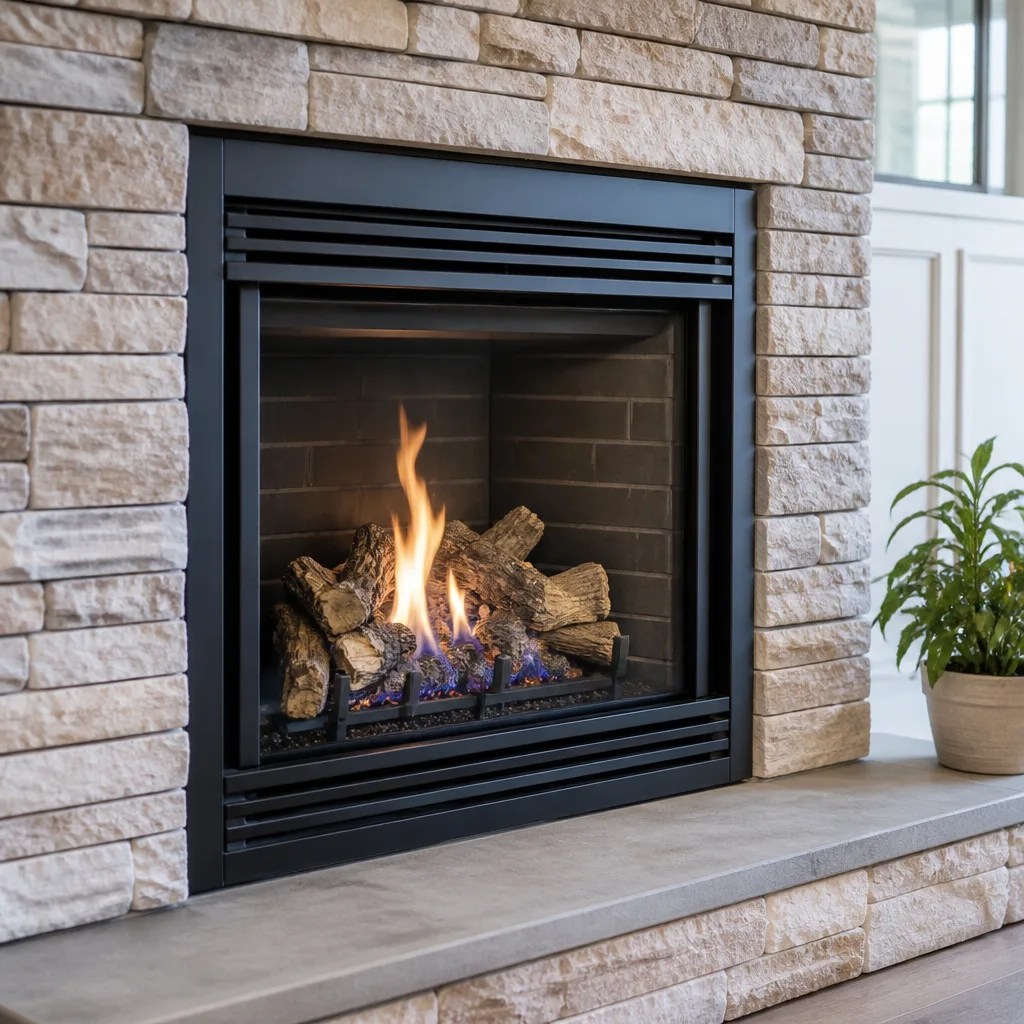 Gas fireplace service
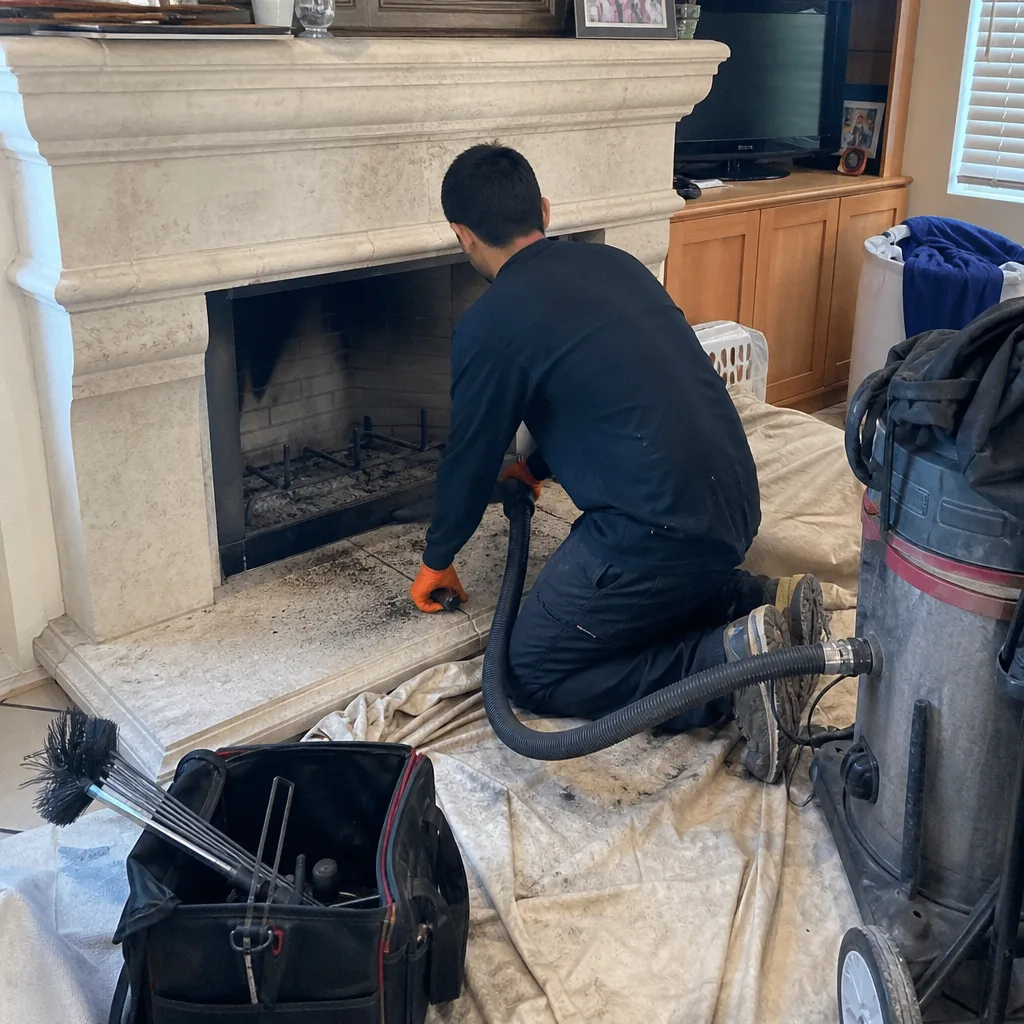
Level 1 sweep and inspection to the NFPA 211 annual standard - flue, crown, cap, and flashing checked and photographed
Chimney sweep logs do not sweep chimneys. They loosen some creosote - which then falls where a brush and vacuum still have to collect it.
Chimney Cleaning Warning Signs: A Irvine Homeowner’s Reference Guide
Here’s a counterintuitive fact we see in Irvine every fall: the homeowners most likely to face a serious chimney problem are not the ones who burn a cord of wood each winter. They’re the ones who light maybe ten fires a season, then ignore the fireplace from March to November. A low-use chimney in Irvine’s marine-influenced climate becomes a slow collection point for damp soot, spider webs, and salt-air residue. When you finally light that first fire of the season, the system hasn’t just been idle. It’s been quietly deteriorating. This guide walks through the warning signs most Irvine homeowners rationalize away, what each one actually tells you, and which ones mean you shouldn’t strike a match until a professional has looked. For a deeper dive into solutions, see our Chimney Sweep Troubleshooting: Common Problems and How to Fix Them.
Styles & brands we work with
Quick Answer
The earliest warning signs of a chimney problem in Irvine are usually smell, not smoke. A musty odor from a closed damper in warm weather signals moisture intrusion or organic debris; an acrid smell after a fire suggests creosote buildup or poor draft; a sulfurous or gas-like odor points to venting failure. Other key signs include visible efflorescence or mortar recession on the exterior chase, draft irregularities during Santa Ana winds, and flaking glaze inside the firebox. Any of these justifies a professional chimney inspection, and several mean the fireplace should stay cold until it’s been cleared.
Table of Contents
- The Smell Signatures: Musty vs. Acrid vs. Sulfurous
- Visual Warning Signs from the Ground: What Irvine Stucco Chases Reveal
- Draft Irregularities: Cold-Flue Puffs vs. Genuine Blockage
- Santa Ana vs. Normal Operation: Why the Distinction Matters
- Schedule an Inspection Soon vs. Do Not Use: A Decision Framework
- Why Low-Use Chimneys in Irvine Fail Differently
- Gas Appliance Warning Signs That Mimic Chimney Problems
- Common Mistakes to Avoid
- When to Call a Professional
- Frequently Asked Questions
- The Bottom Line
The Smell Signatures: Musty vs. Acrid vs. Sulfurous
A chimney speaks through smell long before it shows visible trouble. The problem is that most Irvine homeowners write off these odors as normal fireplace smells, or worse, as a house ventilation issue. They are neither. Here’s what each distinct chimney odor points to structurally.
Musty or damp-soil smell. This is the most common warning sign in Irvine, and the one most often ignored. A damp, earthy smell coming from a closed damper during summer or fall almost always indicates moisture intrusion. Rain has found its way past a cracked crown, a failing chase cover, or a damaged cap. Once moisture is inside the flue, it mixes with creosote residue and any organic debris, producing exactly that basement-like smell. In Irvine’s coastal humidity, that moisture doesn’t evaporate quickly. It sits. And what sits breeds corrosion in metal components and softening in mortar joints.
Acrid or sharp smoke smell. An acrid smell that appears after a fire, or lingers even when the fireplace hasn’t been used in days, points to a different problem: poor draft combined with creosote accumulation. The smoke isn’t leaving efficiently, and the residue it leaves behind is off-gassing back into the room. In stucco-clad Irvine homes with tight building envelopes, this can persist long after the fire is out. The creosote itself isn’t just smelly. It’s flammable.
Sulfurous or gas-like odor. If you smell something like rotten eggs or gas, treat it as a venting failure until proven otherwise. A sulfurous odor near a gas fireplace or gas log set can mean combustion byproducts are not being carried up the flue. That’s a carbon monoxide conversation before it’s a cleaning conversation. In a gas appliance, this may also indicate a blocked vent or a failing gas valve. If you smell gas, you don’t need a chimney sweep first. You need to ventilate the room, leave if the odor is strong, and call your utility provider. Once that’s resolved, a chimney inspection will identify the cause of the venting failure.
In our experience, Irvine homeowners who call about a “weird smell” have almost always been living with it for weeks before picking up the phone. The smells get normalized. They shouldn’t be. Each one maps to a concrete mechanical or structural condition that a sweep can identify, often by camera.
Visual Warning Signs from the Ground: What Irvine Stucco Chases Reveal
You don’t need a ladder or a drone to spot early chimney trouble. Irvine’s dominant exterior finish, stucco over wood frame, creates predictable failure patterns that a homeowner can read from the driveway. The key is knowing what to look for and where.
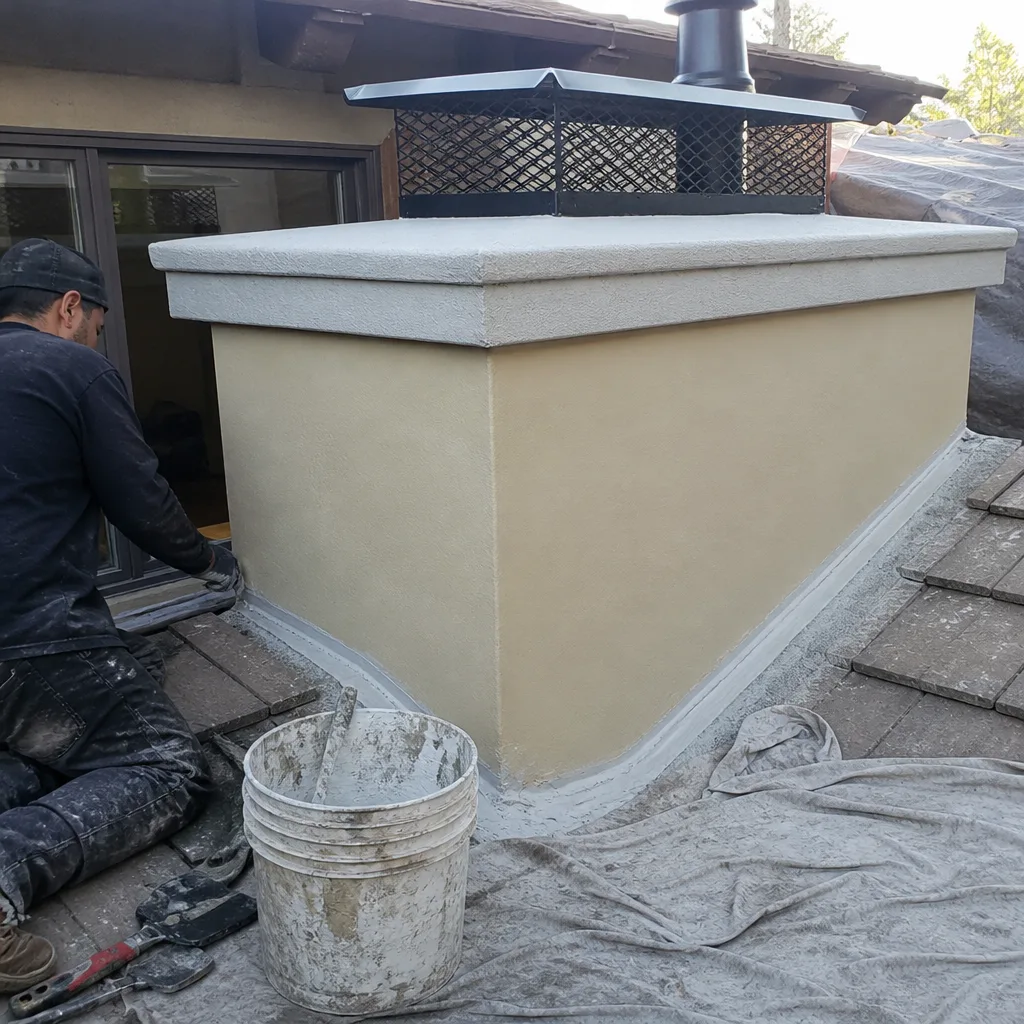
Efflorescence patterns. Efflorescence is that white, chalky bloom that appears on masonry and stucco surfaces. It forms when water moves through a material and deposits salts on the surface as it evaporates. On a chimney chase, efflorescence tells you water is inside the system. A light, even dusting might be cosmetic. A concentrated band or a dripline pattern below the crown or chase top indicates active moisture migration. In Irvine, where stucco chases are the default construction method for most single-family homes built after 1980, efflorescence near the chase top almost always traces back to a failed chase cover or a cracked crown.
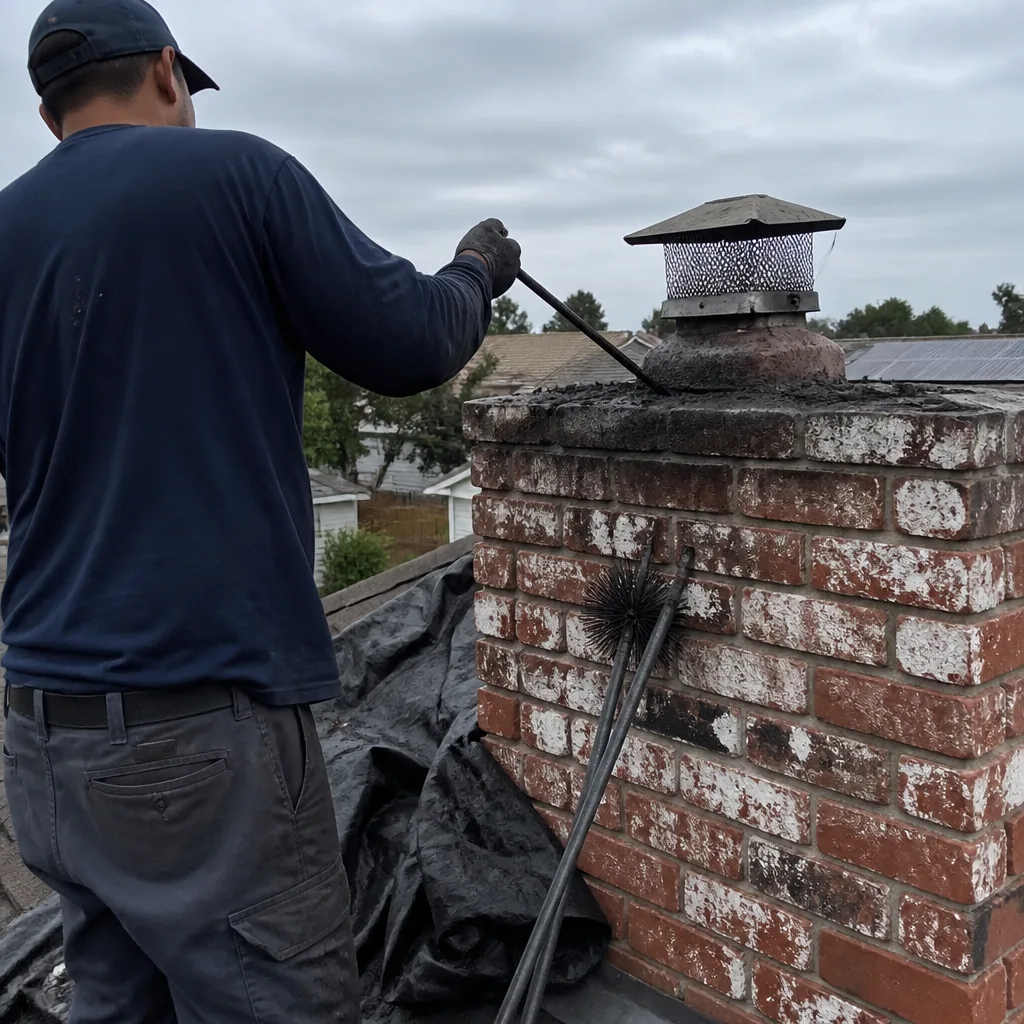
Mortar joint recession. On traditional masonry chimneys, step back and look at the mortar lines. If the joints between bricks or stone look sunken, thin, or sandy compared to the surrounding wall, weather has been eating the mortar. Irvine’s diurnal temperature swings, warm days and cool nights, cause repeated expansion and contraction cycles that gradually loosen mortar. Once joints recess far enough, individual bricks begin to move. That movement widens the next crack, which admits more water, which accelerates the cycle. A chimney at this stage needs tuckpointing or other masonry repair, not just a sweeping.
Crown cracking specific to stucco-clad construction. The crown is the concrete or mortar cap that seals the top of the chimney structure. On stucco chases, the crown often sits beneath a metal chase cover. Cracks here are a direct path for rain. What makes Irvine specific is the rain pattern: long dry periods punctuated by intense winter storms. During the dry months, hairline cracks form as the crown material contracts. When an atmospheric river hits, those same cracks channel water directly into the chimney structure. A crown crack you can see from the ground may have been open for a full season before you noticed it.
None of these exterior signs requires special equipment to spot. They require you to look at your chimney as a structural system, not a decorative column. If any one of them is present, schedule an inspection. If two or more are present, yes, schedule it sooner.
Draft Irregularities: Cold-Flue Puffs vs. Genuine Blockage
Almost every fireplace sends a small puff of smoke into the room during a cold start. The flue is cold, the air inside is dense, and the rising warm smoke needs a moment to establish an upward draft. That first-start puff is normal. What’s not normal is smoke that keeps coming back.
Here’s how to tell the difference.
- Watch the first two minutes. A normal cold-flue puff lasts a few seconds, then the draft catches and smoke pulls up cleanly. If smoke continues to spill into the room after two or three minutes of a well-established fire, something is preventing proper venting.
- Check for the “reverse” moment. A genuine downdraft does something distinctive: the smoke rises partway up the firebox, hesitates, then rolls back down into the room, often in visible eddies. This is the flue losing or never establishing positive pressure. A blockage, an undersized flue, or a negative-pressure competition with kitchen and bath exhaust fans can all cause it.
- Test with a rolled newspaper twist. Hold a lit piece of newspaper near the damper opening before building the fire. If smoke rises up the flue, the draft path is clear. If it hangs in place or pushes back at you, the chimney has a venting problem that needs diagnosis before you burn a full fire.
Blockages that cause draft failure come in predictable forms. In Irvine, where chimneys sit idle for months, bird nests are common. Swallows and house sparrows find an uncapped flue an ideal cavity. Debris accumulation from leaf litter and pine needles can partially obstruct the flue, reducing draft enough to cause intermittent spillage even if not fully blocked. And in older chimneys, flaking tile liner pieces can shift and trap debris, creating a partial choke point.
The operative distinction: a momentary first-start puff is normal. A pattern that repeats for minutes, or happens every time you light a fire, is not.
Santa Ana vs. Normal Operation: Why the Distinction Matters
Santa Ana winds are not just a wildfire concern. They’re a diagnostic tool for chimney performance, and this is a point most warning-sign guides completely miss. Irvine sits directly in the path of the Santa Ana wind corridor through the Santa Ana Mountains and Santiago Canyon. When those offshore winds blow, they create pressure conditions that reveal chimney weaknesses invisible during still weather.
What Santa Ana conditions expose. Santa Ana winds are dry, warm, and often gusty. They push against the exterior of your home unevenly, creating pressure differences between rooms, and they can press down on a chimney cap from above. If your chimney has a marginal draft under normal conditions, Santa Ana winds will exaggerate or reverse it. A fireplace that drafts fine on a calm January evening may spill smoke unpredictably during a wind event. The wind is not the cause. The wind is the amplifier. The cause is often a flue that’s too short for the roofline, a missing or damaged cap, or a partial blockage that only matters when exterior pressure climbs.
Symptoms that appear only during Santa Ana conditions.
- Smoke spillage when wind gusts hit 20 to 30 mph.
- A sudden cold draft pouring down the chimney into the living room, even with the damper closed.
- Whistling or moaning sounds from the chimney chase during high wind events, which often indicate a loose chase cover, damaged cap, or open mortar joint acting as a reed.
- Ash smell in the room during strong wind even though the fireplace is cold.
Why this matters diagnostically. If you only notice chimney symptoms during Santa Ana winds, the underlying condition is still present the other 350 days of the year. It’s just below the threshold of perception. A chimney that misbehaves only in wind is a chimney that has a real, diagnosable issue. It hasn’t failed fully yet, which is exactly the moment to fix it. Waiting until the problem shows up in calm weather means waiting until the deterioration has progressed significantly.
Schedule an Inspection Soon vs. Do Not Use: A Decision Framework
Not every warning sign carries the same urgency. The useful distinction for an Irvine homeowner is simple: which signs mean “call for an inspection in the next month,” and which mean “do not use this fireplace at all until a professional clears it.” Here’s the framework we use with customers.
Schedule an inspection soon. These signs indicate developing problems that are unlikely to cause immediate danger but will get more expensive the longer they’re ignored.
- Faint musty odor from the damper during warm weather.
- Light efflorescence on exterior masonry or stucco with no visible cracking.
- Mild first-start smoke puff that clears within a minute or two.
- Minor mortar recession with no loose bricks.
- Occasional whistling during high wind events.
- An unused fireplace that hasn’t been inspected in three or more years.
Do not use the fireplace until inspected. These signs indicate conditions where lighting a fire could directly release combustion gases, smoke, or embers into the living space, or where the structural integrity of the system is compromised enough that heat exposure creates risk.
- Smoke that spills into the room repeatedly during normal operation, or any backdraft that lasts more than a few seconds.
- A sulfurous or rotten-egg smell when the fireplace is lit or gas is on.
- Visible flakes of tile or masonry debris in the firebox.
- Loose or shifting bricks anywhere on the chimney structure.
- Water stains appearing on the ceiling or walls adjacent to the chimney chase after rain.
- Any sign of animal nesting, including twig debris in the firebox, scratching sounds, or repeated bird activity at the chimney opening.
When in doubt, err toward the second category. The cost of an inspection is modest compared to the cost of discovering a cracked flue liner by having smoke fill your living room during a family gathering, or finding that a chimney fire has cracked the flue tiles after you’ve ignored a draft problem for two seasons.
Why Low-Use Chimneys in Irvine Fail Differently
This is the pattern that surprises Irvine homeowners most. You’d expect a chimney that burns five cords of oak every winter to be the one with problems. But in our experience, the low-use Irvine fireplace has a distinct and often worse failure profile.
Here’s the mechanism. A frequently used chimney gets hot enough, often enough, that creosote deposits stay relatively thin and dessicated. Each fire bakes the previous fire’s residue. A low-use chimney, by contrast, accumulates creosote during the few fires it does see, then sits damp for nine months while coastal humidity and seasonal rain keep that residue moist. Moist creosote is more acidic than dry creosote. It etches mortar joints and corrodes metal components faster than its dry counterpart. The result: a chimney that burns ten fires a year can develop more internal damage per fire than one that burns a hundred.
The second factor is animal intrusion. An idle flue in Irvine’s suburban-orchard landscape is an open invitation. The same neighborhoods that back up to the San Joaquin Marsh or run along the San Diego Creek corridor have active bird and rodent populations. A chimney without a proper cap, or with a damaged cap, becomes a nesting site during the long idle months. By the time you’re ready to light that first October fire, the flue may be partially filled with nest material that is both a draft obstruction and a fire load.
The takeaway is the opposite of what most homeowners assume. Low use does not mean low maintenance. It means a different maintenance profile, and one that genuinely benefits from an annual inspection even if you almost never burn.
Gas Appliance Warning Signs That Mimic Chimney Problems
Many Irvine homes run gas log sets or gas inserts in their masonry fireplaces, and some have factory-built direct-vent gas fireplaces. These systems produce warning signs that are easy to misread. Here’s what to watch for.
White or gray film on glass doors. On a direct-vent gas fireplace, a milky film forming repeatedly on the inside of the glass is a combustion tuning problem. The burn isn’t clean, which means the air-to-fuel mix is off, which means the unit may be producing elevated carbon monoxide. This is not a cleaning issue. It’s a venting or burner adjustment issue that a qualified technician should address.
Soot accumulation around the gas log set. Gas flames should burn blue and clean. If you’re finding black soot on the logs, around the damper, or on the surround, the burner is running too rich. That soot is unburned carbon, and it’s signaling incomplete combustion. In a gas insert or gas log installation vented through an existing chimney, sooting also indicates that venting is inadequate for the appliance, a common installation error.
Water streaks inside the firebox. Gas fireplaces should have no standing moisture. Water stains or rust in the firebox point to the same issues as their wood-burning counterparts: a failing cap, cracked crown, or leaking chase. The difference with gas is that corrosion can affect gas valve components, creating a situation where you’re not just repairing water damage but replacing safety-critical parts.
Intermittent operation on windy days. A gas fireplace that shuts off or won’t light during Santa Ana conditions is often suffering from a vent termination that’s poorly positioned for Irvine’s wind patterns. The wind creates backpressure against the vent, triggering a safety sensor that shuts down the unit. The good news is the safety system is doing its job. The bad news is the vent needs repositioning or shielding.
Gas appliances don’t remove the chimney from the equation. They change its role. The flue is still the failure point for carbon monoxide management, and the exterior structure is still the failure point for moisture intrusion. The inspection requirement doesn’t disappear when you convert to gas. It changes focus.
Common Mistakes to Avoid
- Assuming low use means no cleaning. As covered above, an idle Irvine chimney accumulates acidic, moisture-saturated creosote that ages the system faster than regular use. Annual inspection is the minimum, regardless of burn frequency.
- Treating smell as a house issue, not a chimney issue. Musty smells near the fireplace get blamed on carpet, crawlspaces, or old drywall. If the smell intensifies when the damper is opened, the chimney is the source.
- Waiting until the fall shut-off date. Irvine’s fall season is one of the busiest booking windows for chimney and dryer vent cleaning. The homeowner who calls in September for an October inspection is calling behind everyone else. Spring and summer appointments are faster to schedule.
- Ignoring Santa Ana-only symptoms. A fireplace that misbehaves only during wind events still has a real mechanical issue. The wind isn’t the cause; it’s the diagnostic.
- Patching stucco without fixing the underlying leak. When a chimney chase develops water intrusion, the stucco crack is a symptom, not the root failure. Patching it cosmetically traps moisture inside the chase, which accelerates wood rot and frame damage.
- Assuming a gas fireplace doesn’t need chimney work. Gas conversions still rely on the flue for venting and the exterior structure for weather sealing. A failing liner or damaged crown doesn’t care what fuel you burn.
- Using the fireplace as a trash incinerator. Burning wrapping paper, cardboard, or treated lumber produces high, fast heat and floating ember debris. Paper in particular drifts up the flue while still burning. It’s a common cause of chimney fires in Irvine homes during the winter holidays.
When to Call a Professional
Any of the warning signs in this guide justifies a call. The ones that require immediate professional attention are repeated smoke spillage, sulfurous or gas odors, loose masonry, debris in the firebox from flue deterioration, and water stains appearing after rain. These indicate conditions where using the fireplace is genuinely unsafe until the system has been inspected. A professional sweep brings two things a homeowner cannot replicate: a camera inspection of the full flue length, and the materials to fix what the camera finds. At Limestone Chimney Sweep, we stock and install professional-grade components from manufacturers like Olympia Chimney, Famco, and Copperfield, which means the repair conversation and the repair itself happen on the same visit in most cases. We offer free estimates in Irvine. Call (855) 341-5439.
Frequently Asked Questions
Every year, even if you rarely use the fireplace. Irvine’s coastal humidity means creosote stays moist and acidic between burns, accelerating internal corrosion. The National Fire Protection Association standard recommends annual inspection, with cleaning performed when creosote accumulation reaches 1/8 inch. For an Irvine homeowner who lights fewer than a dozen fires a season, an inspection every 12 to 18 months keeps the system in a safe window. For help selecting a trusted provider, see our Choosing the Right Chimney Cleaning Brand: A Buyer’s Guide for Irvine. Call (855) 341-5439 to schedule.
A standard sweep in Irvine typically runs $150 to $280, depending on the flue type and access. When the inspection reveals repair work, the scope changes; liner restoration with HeatShield materials or component replacement with Limestone Chimney Sweep’s stocked DuraFlex and Olympia Chimney parts adds to the total and is quoted separately before work begins. Free estimates are available at (855) 341-5439.
If the fireplace has been inspected within the last year and no signs have appeared since, yes. If it’s been more than a year, the safe answer is to schedule an inspection before burning. Many of the most serious conditions we find in Irvine chimneys are invisible from the firebox and produce no odor or draft symptom until the system is under heat load.
Often, yes, and the distinction matters. Most sweep companies clean and inspect, then hand you a report and a referral list. Limestone Chimney Sweep carries repair materials, including DuraFlex liner systems and HeatShield restoration products, and completes the repair as part of the same service relationship. If the inspection finds damage, you’re not sent to another contractor.
The musty smell and a clean firebox are not contradictory. The moisture and organic debris causing the odor are often trapped higher in the flue, in the smoke shelf, or behind the damper where they aren’t visible from the living room. A camera inspection will locate the source. In Irvine’s climate, this smell commonly traces to a failing chase cover that has admitted three or four winters of rainwater.
The maintenance frequency is similar, but the focus shifts. Gas appliances need an annual inspection of the venting system for blockages, corrosion, and combustion tuning. The exterior structure, cap, crown, and chase still require weather sealing. Many Irvine homes with gas log sets also have dryer vents that need the same attention as part of a whole-house ventilation safety approach.
The Bottom Line
Irvine’s climate makes chimney maintenance a year-round conversation, not a fall chore. The warning signs that matter most are the ones you can rationalize away: a faint musty smell in July, a smoke puff that lingers a little too long in January, a white chalk line on the stucco chase, a whistle during Santa Ana wind. Each one maps to a real condition that gets more expensive the longer it waits. A camera inspection answers the question definitively. A sweep that carries repair materials answers what comes next. If you’ve noticed any of the signs in this guide, or if it’s simply been more than a year since anyone looked, call Limestone Chimney Sweep at (855) 341-5439 for a free estimate in Irvine. The fireplace is supposed to be the warmest part of the house, not the most ignored safety system in it.
Written by the team at Limestone Chimney Sweep, serving Irvine since 2014.
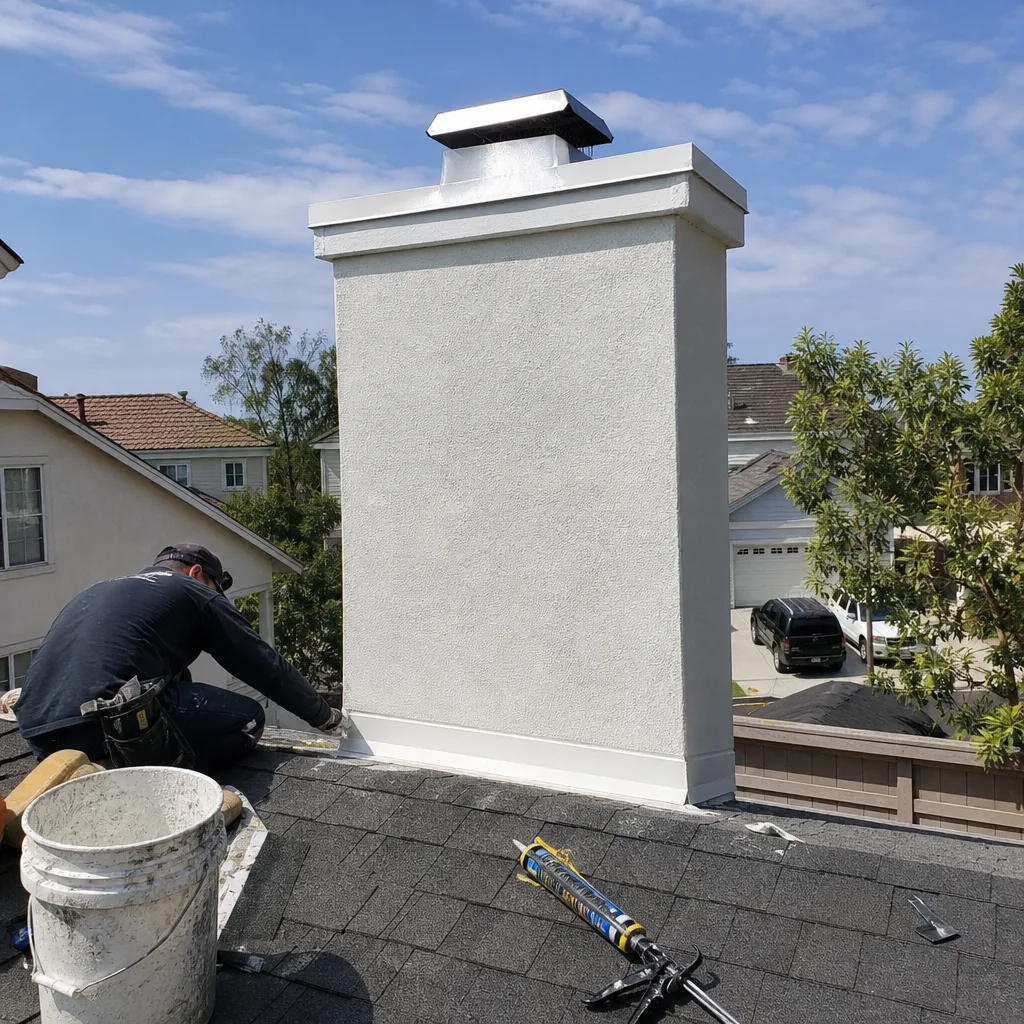
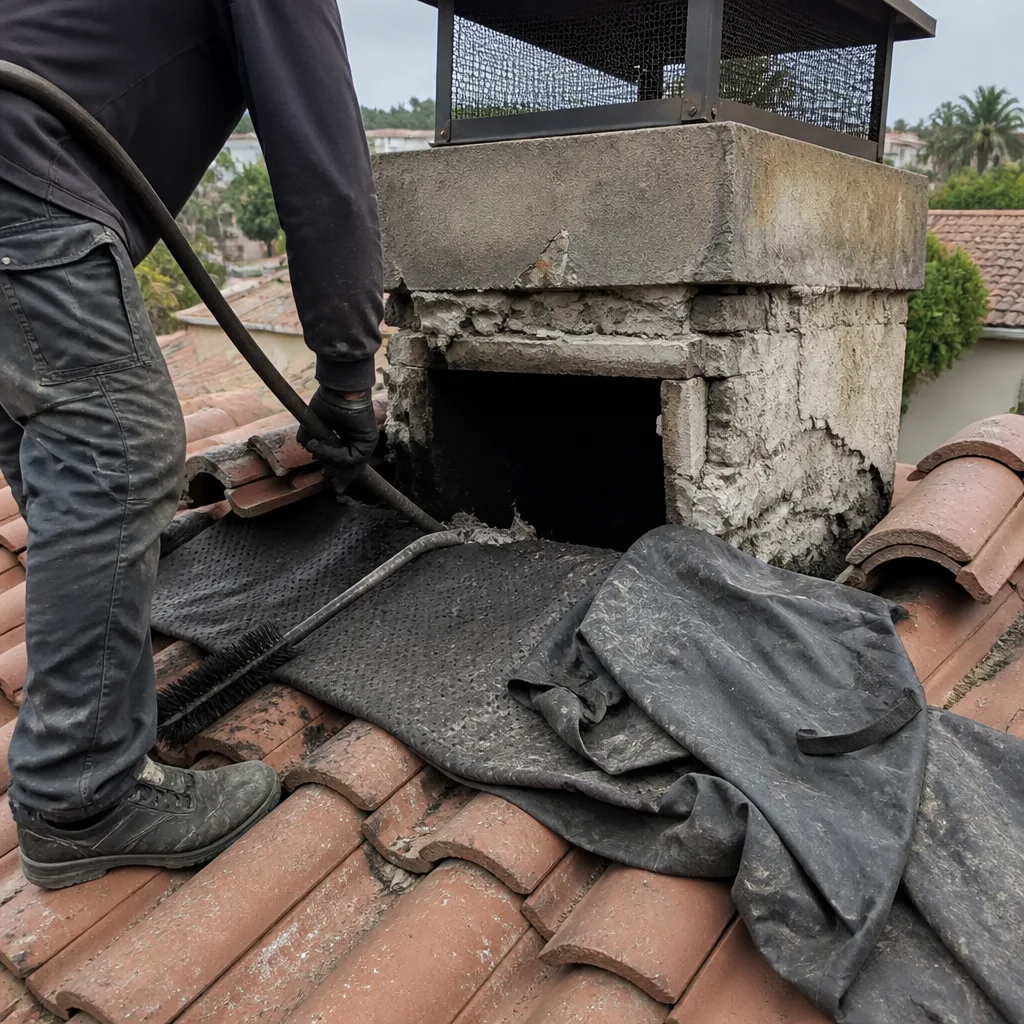
See the difference
 Before
 After
 Before
 After
 Before
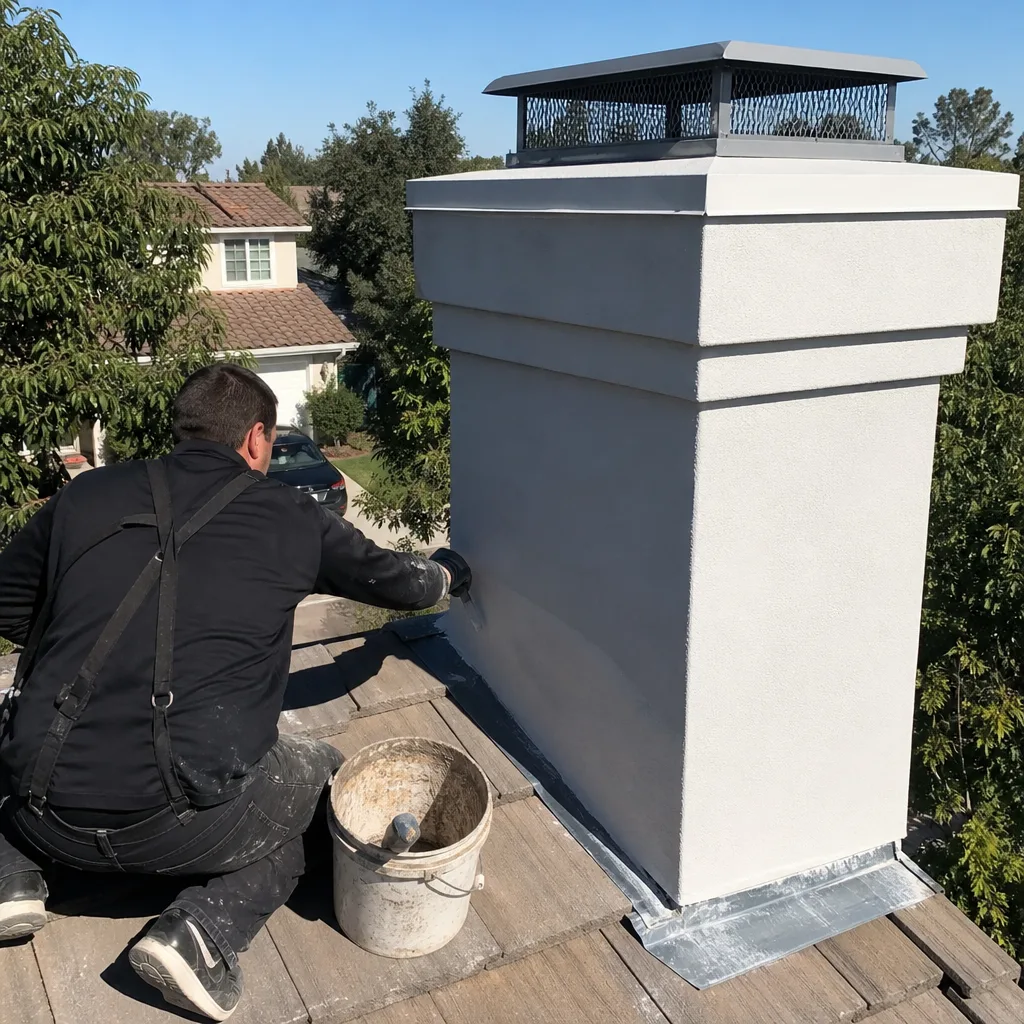 After